[ Donate ]
Development of the Polynon Workspace and associated research is actively underway. Early access will open shortly. Until access opens, you can support the research directly:



Contributions directly fund research, platform development, and the release of new materials.
- [ Founding Access ]
The Polynon Workspace
Consciousness research remains fragmented across neuroscience, physics, philosophy of mind, and AI. The Polynon programme develops formal frameworks for studying consciousness through geometry, computation, and structural models of observation.
The Early Access provides interested parties entry to the experimental Polynon Workspace, a research environment designed to explore these ideas through interactive models, visual structures, and computational tools, which formalize the framework and investigate its mathematical, computational, and structural implications for the study of cognition and observation.
[ The Workspace ]
A state-of-the-art platform for consciousness science.
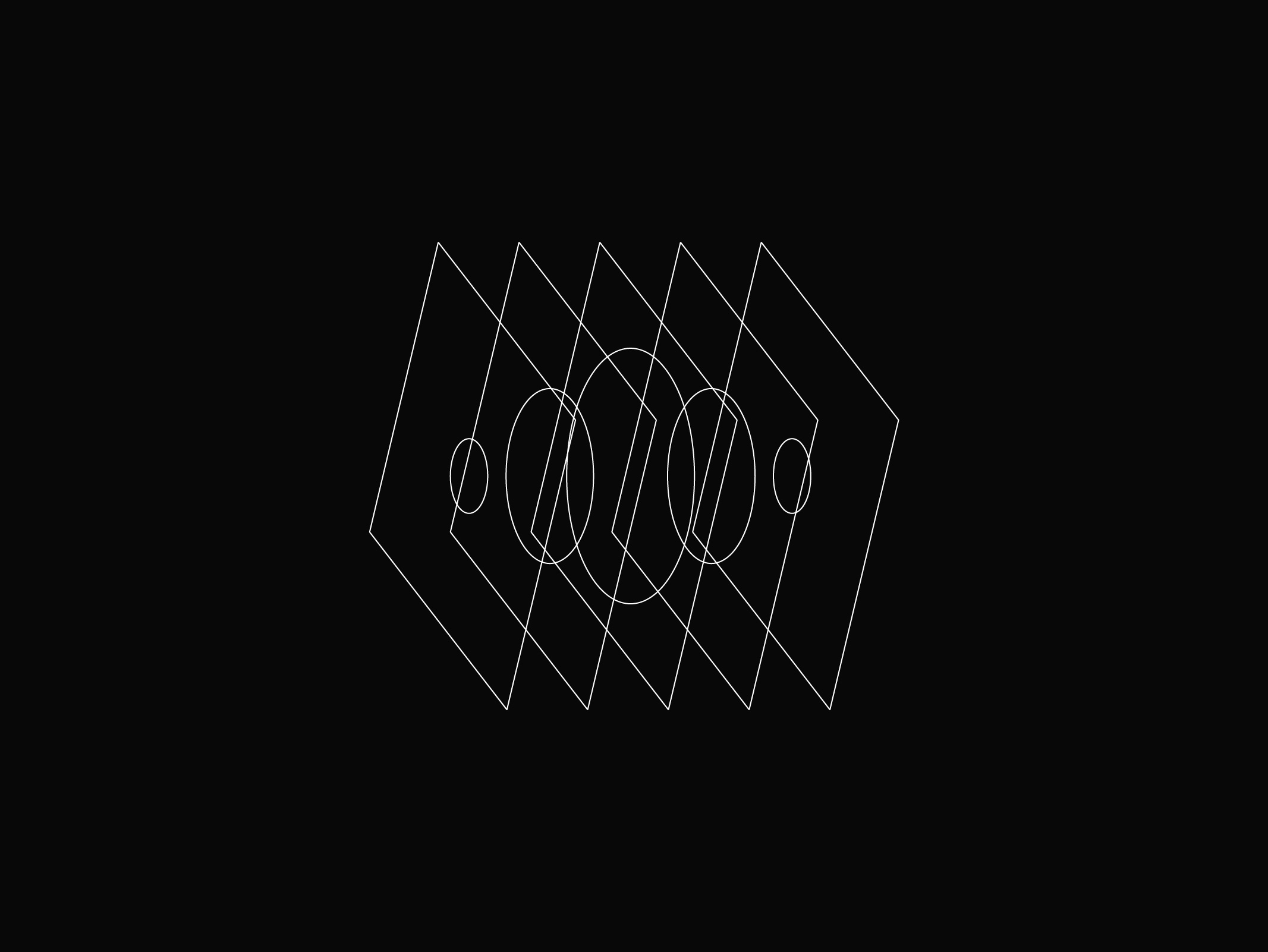
The Workspace operationalizes the framework through computational models and interactive structures that can be inspected and manipulated directly. These models support applications across quantum foundations, AI architectures, and cognitive science, where geometric representations of observation, cognition, and structural relations can be explored through simulations, diagrams, and computational prototypes.
-
1
Polynon
Interactive structures derived from Polynon geometry, allowing exploration of how the formal relations within the framework generate different structural configurations
-
2
Geometric Cognition
Exploration of geometric cognition, neurogeometry, and cognitive geometry, examining how perceptual and cognitive processes may be described through geometric relations
-
3
Cognitive Gravity
Experimental models investigating cognitive gravity and cognitive gradients as structural principles for describing how perception organizes and stabilizes experiential structures
-
4
Holographic Mechanism
Exploratory models examining whether relations between cognition and observable structure can be described through a holographic formalism within the Polynon framework
-
5
Cognitive Constructs
Analysis of how different Polynon configurations generate cognitive constructs and structural patterns that correspond to perceptual or conceptual organization
-
6
Observer Role
Investigation of the observer within the mechanism of perception and phenomena, focusing on how observation participates in the emergence and stabilization of observable structures
[ Benefits ]
Access to a dedicated research environment supporting rigorous inquiry into consciousness, cognition, and the fundamental structures of observation.
- [ Research ]
- [ Innovation ]
Access to a structured set of primitives and mechanisms for constructing and testing models of cognition. Supports hypothesis generation, controlled variation of parameters, and iterative refinement of theoretical constructs across multiple levels of abstraction.
- [ Deep-tech ]
- [ Integration ]
Bridges consciousness research with computational systems through shared structural representations. Connects geometric cognition, quantum-like correlation regimes, AI architectures, and interface systems into a unified operational layer. Enables direct mapping between theoretical models and executable environments, supporting both simulation and applied development.
- [ Assistant ]
A cognitive research companion operating on structural representations rather than surface-level language. Assists in navigating relations between concepts, formal models, and experimental setups. Supports decomposition of complex problems, identification of latent structures, and alignment between theoretical intent and computational implementation across domains such as consciousness science, physics, and machine systems.
- [ Cross-disciplinary ]
- [ Synthesis ]
Unifies domains that typically operate in isolation by providing a shared structural framework. Aligns cognitive science, foundational physics, philosophy of mind, and AI through common geometric and relational constructs. Facilitates transfer of insights across domains by preserving structural consistency rather than translating between incompatible representations.
- [ Structural ]
- [ Theory of mind ]
Defines observer dynamics through explicit mechanisms linking cognition, geometry, and correlation structures. Models how observation, attention, and relational positioning generate accessible phenomena. Provides a framework for analyzing how internal structure gives rise to perceived continuity, interaction, and constraint within both classical and quantum-like regimes.